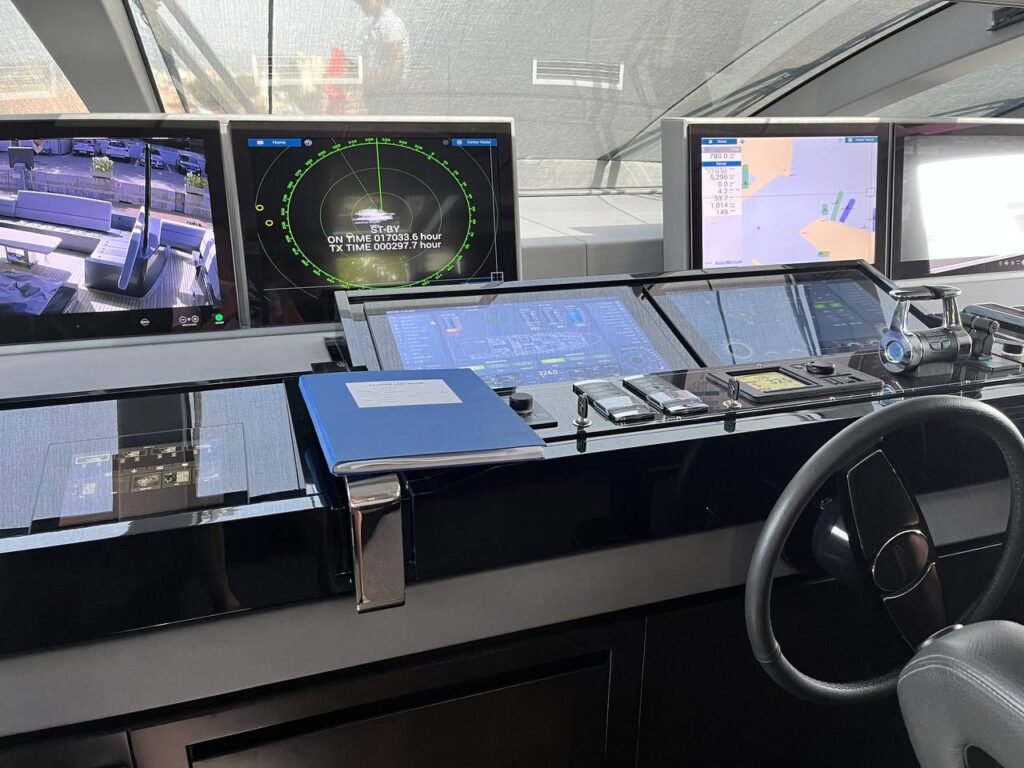
Autopilot Calibration for Accurate Navigation
A correctly calibrated autopilot is essential for holding course, reducing helm corrections and improving fuel efficiency on both sailing yachts and motor yachts. Calibration is not just a setup step; it directly affects the reliability of the entire steering and navigation system.
Key Instruments Checked During Calibration
When calibrating an autopilot, the best results come from checking the full sensor chain that feeds the system. This typically includes:
- Wind sensors: Correct alignment and setup provide accurate apparent wind speed and direction, especially important when sailing to wind angles.
- Speed logs: A reliable speed-through-water reading helps the navigation system calculate performance and steering response correctly.
- Electronic compasses and gyros: Accurate heading and rate-of-turn data ensure that the autopilot holds the intended course without hunting or over-correcting.
Benefits of Precise Calibration
A properly calibrated system delivers measurable advantages for owners, captains and engineers:
- Better autopilot response in changing sea states and wind conditions.
- Improved fuel efficiency thanks to cleaner course keeping and fewer unnecessary corrections.
- Reduced manual intervention from the helm, improving comfort and safety on longer passages.
- More dependable navigation data for connected instruments and chartplotters.
Professional Review and Adjustment
At Area Electronica, we calibrate and optimise autopilot systems from leading marine electronics brands including Raymarine, Garmin and Simrad. Our technicians verify the installation, sensor data and software settings so your navigation system performs reliably when it matters.
Related Documentation
Need to improve the accuracy of your navigation system? Contact us to optimise the electronics on board your vessel.