Galvanic corrosion on steel-hulled yachts
Galvanic corrosion is one of the most important maintenance risks for any steel-hulled sailing yacht. It occurs when dissimilar metals are electrically connected through a conductive electrolyte, such as seawater. The resulting electrochemical reaction can attack the less noble metal and gradually damage hull plating, fittings, weld areas or underwater appendages.
What we found during inspection
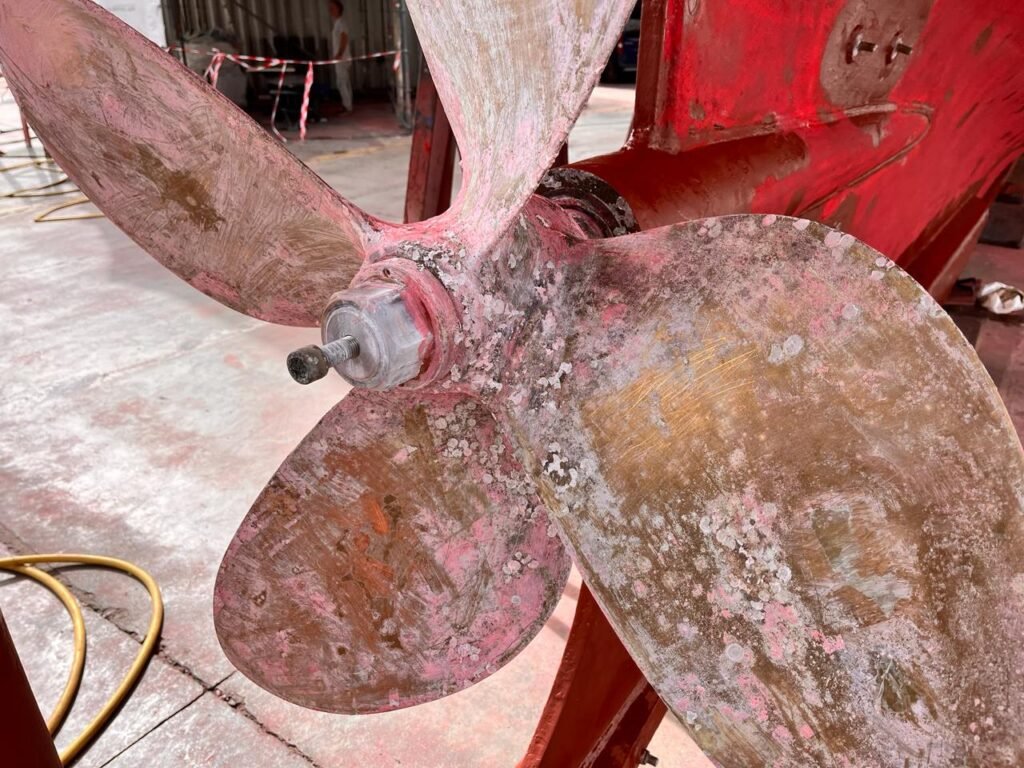
During an inspection of a sailing yacht in the yard, we observed clear warning signs of galvanic activity: paint blistering, local coating failure and deterioration of the protective system. On a steel hull, these symptoms should be investigated promptly because corrosion can progress beneath coatings and eventually affect structural integrity.
Why sacrificial anodes matter
Sacrificial zinc anodes are installed to protect submerged metal structures by corroding before the hull or other critical components. However, anodes only work correctly when they are properly sized, correctly bonded and replaced before they are consumed. Anodes that are worn out, poorly positioned or electrically disconnected leave the hull with insufficient protection.
Common causes of inadequate galvanic protection
- Over-consumed sacrificial anodes: anodes that are too worn can no longer provide effective protection.
- Poor hull isolation or bonding issues: incorrect electrical bonding can create corrosion paths or leave components unprotected.
- Stray currents: faulty DC wiring, shore-power issues or defective equipment can introduce current leakage and accelerate corrosion.
- Coating damage: exposed steel, damaged primer or incorrectly applied antifouling can create vulnerable areas.
Recommended prevention and corrective actions
- Inspect and replace sacrificial anodes on a scheduled basis, not only when damage becomes visible.
- Check continuity and bonding arrangements for underwater metals and hull protection systems.
- Inspect the vessel’s electrical installation for leakage current, poor grounds and shore-power faults.
- Repair coating failures properly, including surface preparation, compatible primers and correct antifouling application.
- Document the condition of the hull and anodes at each haul-out to identify accelerated wear trends.
Protecting the vessel before the damage becomes expensive
Galvanic corrosion is much easier and less costly to prevent than to repair after metal loss has occurred. For steel yachts, a disciplined inspection routine covering anodes, electrical systems, coatings and shore-power connections is essential.
If your yacht shows blistering, unusual anode consumption or signs of electrical corrosion, contact us for a professional marine-electrical inspection and a tailored protection plan.
Schedule an inspection with us here.