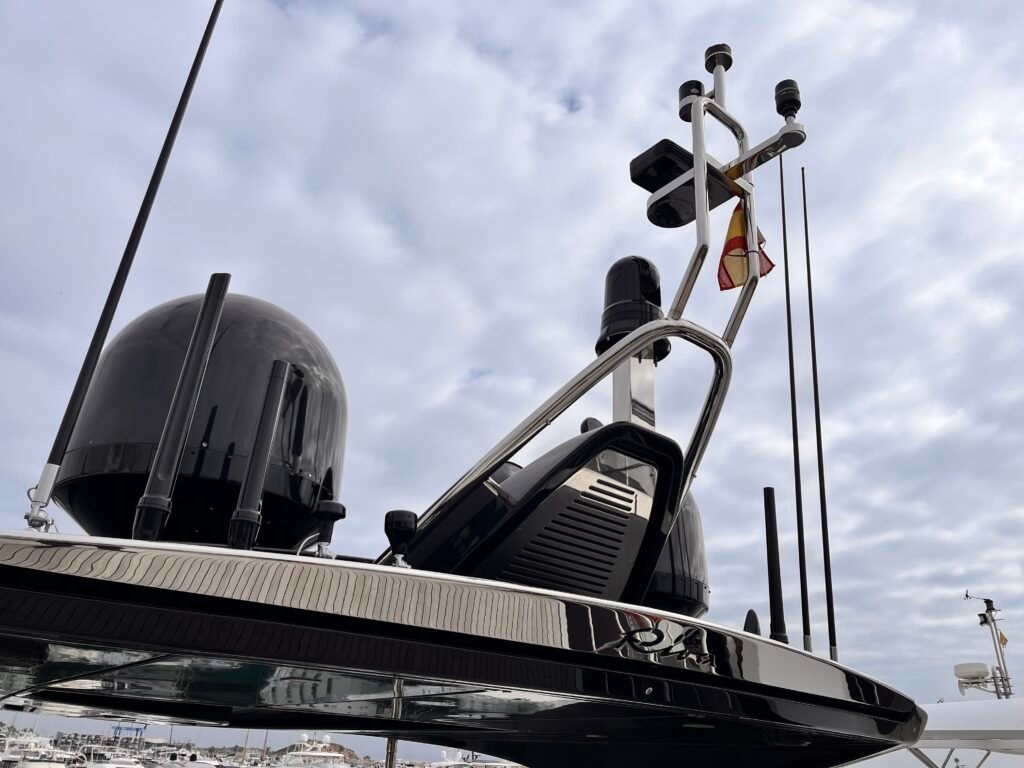
Why Weather Sensor Position Matters on Board
Wind sensors and marine weather stations provide critical information for safe navigation, sail trim, routing and onboard decision-making. If the sensor is installed in the wrong position, the data shown at the helm can be inaccurate, delayed or distorted by the vessel itself.
Common Mistake: Installing the Sensor in Disturbed Air
One of the most frequent installation errors is mounting the sensor where airflow is obstructed by the mast, high structures, antennas, radomes or decorative fittings. In the case reviewed, the sensor had been installed aft of the mast and behind a decorative light, causing turbulence and unreliable measurements.
Where Should a Marine Weather Sensor Be Installed?
- On sailing yachts: The preferred location is normally at the top of the mast, where structural interference is minimal and wind exposure is clean.
- On motor yachts: The sensor should be fitted on the superstructure or another elevated position, away from objects that create turbulence.
- Avoid leeward or sheltered areas: Always choose a position with direct exposure to airflow and minimal interference from the vessel’s own equipment and structure.
Recommended Brands and Models
Some of the most accurate and reliable marine weather sensors are supplied by manufacturers such as B&G, Garmin and Airmar. Models such as the B&G WS310 and Airmar PB200 can provide dependable wind data when they are installed and configured correctly.
Manufacturer website: AIRMAR WEATHER STATION
Conclusion
For accurate onboard weather data, sensor location is critical. A poor installation affects navigation performance and can lead to incorrect decisions during manoeuvring, passage planning or deteriorating weather conditions.
Need Help with Your Marine Electronics?
At Area Electronica, we specialise in the installation and configuration of marine electronic systems. Contact us to avoid unreliable readings and improve confidence at the helm.