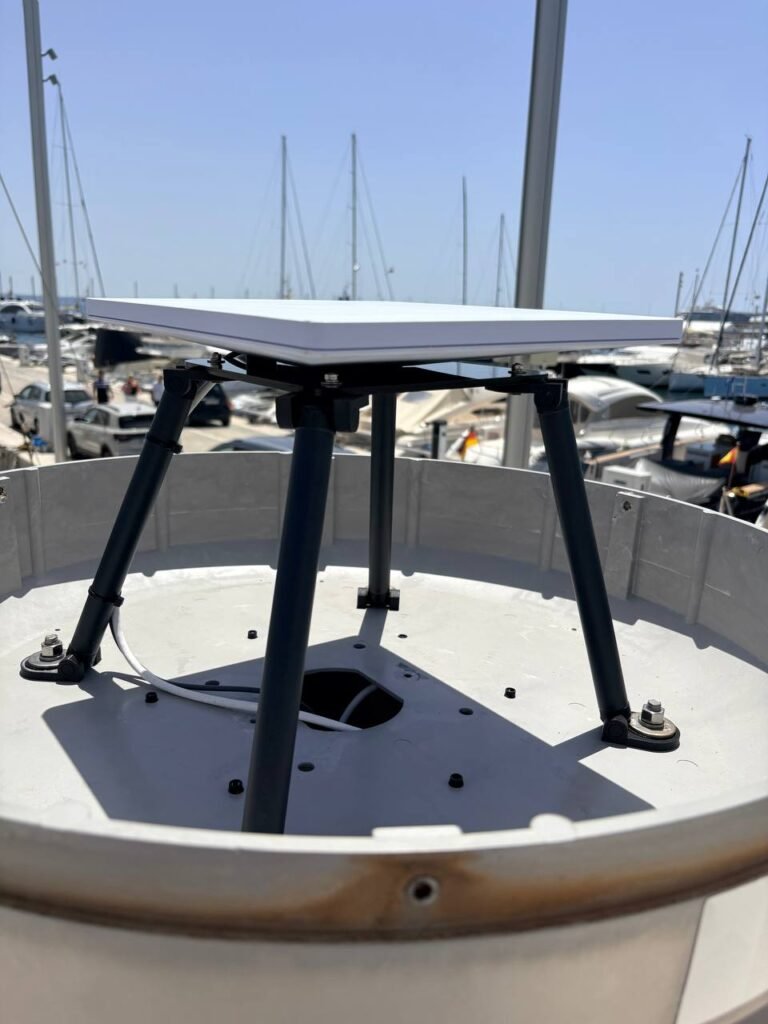
One of the most common questions I receive from yacht owners and captains is simple: which Starlink system should I install on my boat?
The short answer is that it depends on the vessel, the way it is used, the number of people onboard, and the level of reliability expected. A small sailing yacht, a tender, a private cruising yacht and a charter superyacht do not have the same connectivity requirements.
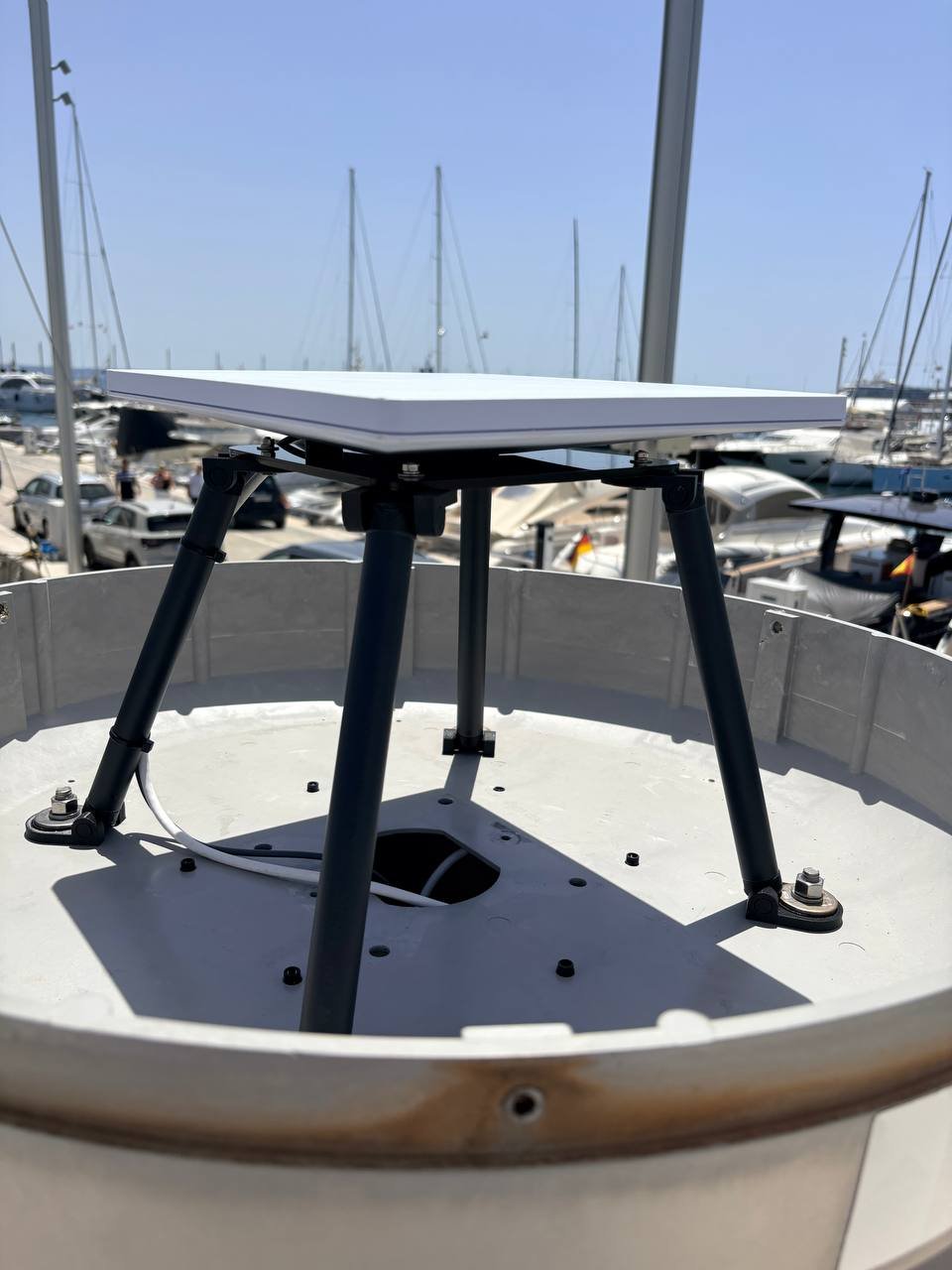
Starlink Mini
The Starlink Mini is the smallest and most portable model in the Starlink lineup. It is attractive because it is compact, easy to move and has very low power consumption.
Advantages
- Compact and lightweight.
- Very low power consumption.
- Easy to power from a 12 V system using an appropriate DC converter.
- Excellent as a portable or backup Internet solution.
Limitations
- Lower overall performance than larger models.
- Not the best option for boats with many simultaneous users.
- Less margin in heavy rain or challenging operating conditions.
Best suited for: small motorboats, sailing yachts, tenders, chase boats and emergency backup communications.
Starlink Standard
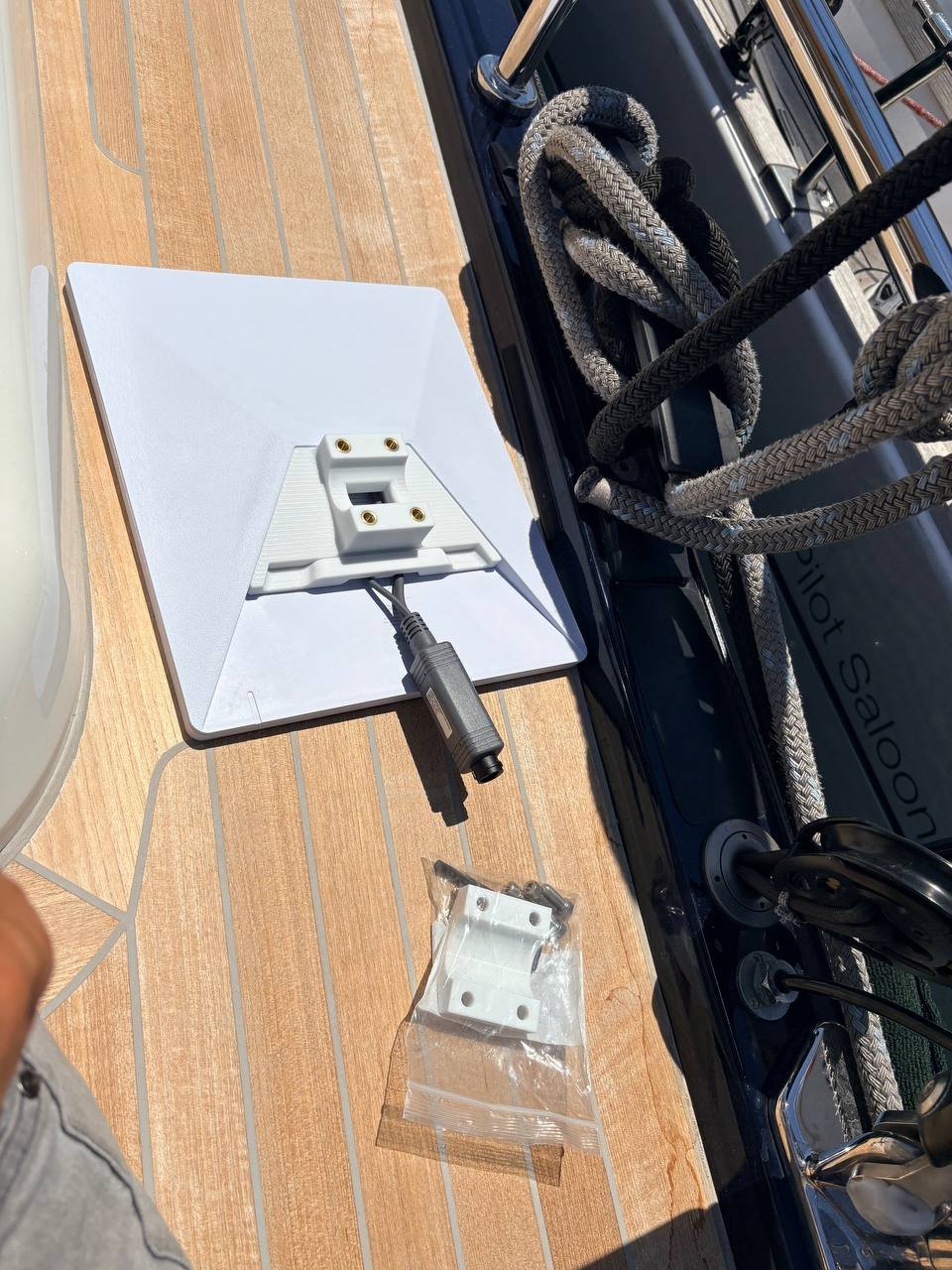
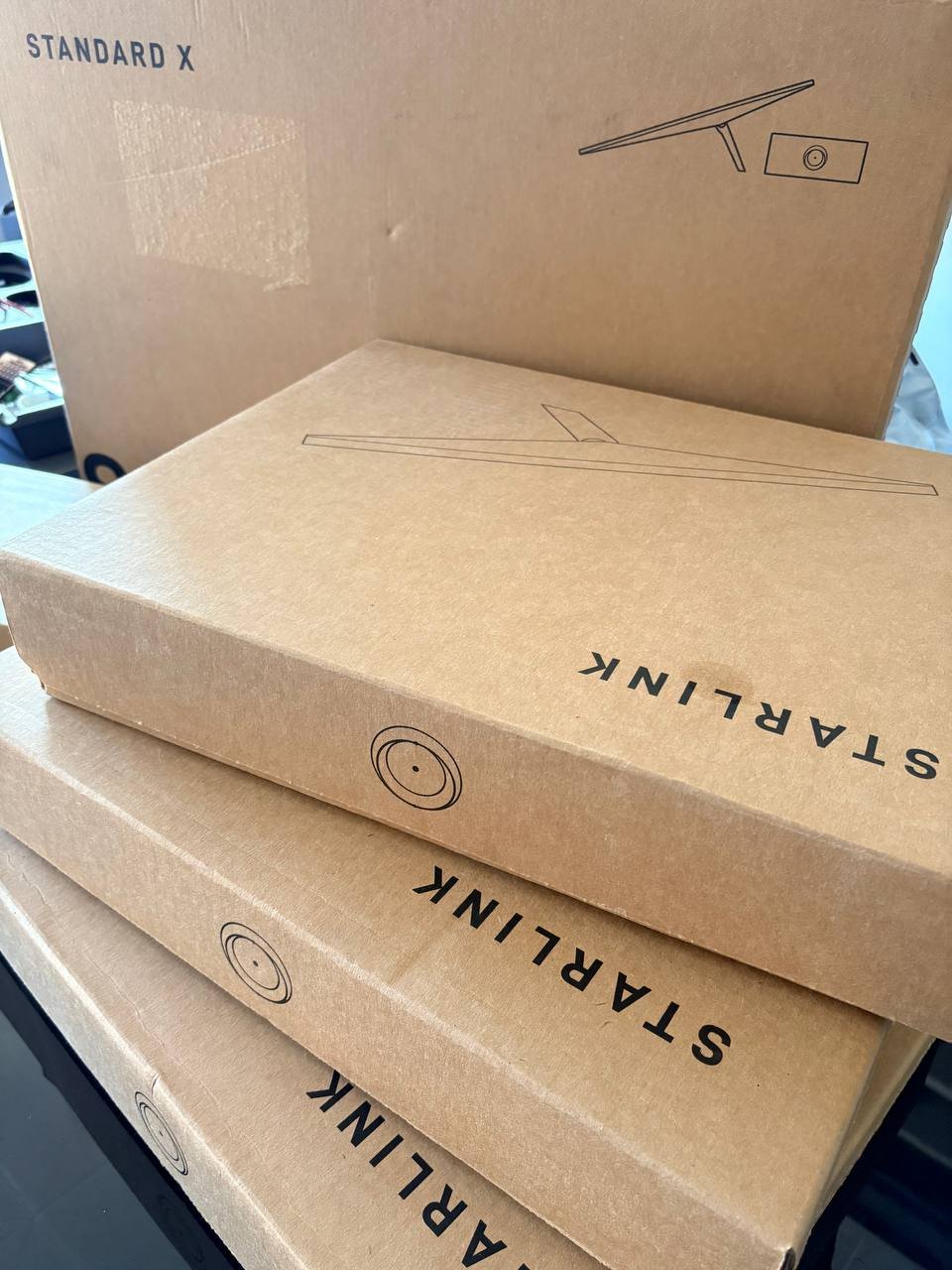
For most recreational vessels, Starlink Standard currently offers the best balance between performance, cost and installation flexibility.
Advantages
- Excellent download and upload speeds for normal yacht use.
- Reliable performance when correctly installed with a clear sky view.
- Competitive hardware cost.
- Integrates well with professional networking equipment such as Peplink routers.
Limitations
- Higher power consumption than the Mini.
- During severe weather, performance may be slightly lower than the Performance model.
- The final result depends heavily on the mounting position, cable routing and network design.
Best suited for: private yachts, cruising vessels, boats between roughly 15 and 40 metres, and owners looking for dependable high-speed Internet without overcomplicating the system.
Starlink Performance
Starlink Performance, previously known as High Performance, is designed for professional and more demanding applications. It is the right option when connectivity is considered operationally critical.
Advantages
- Superior performance in heavy rain and harsh weather.
- Larger antenna with improved signal reception.
- Designed for continuous 24/7 operation.
- Excellent choice for demanding marine environments.
Limitations
- Significantly more expensive.
- Higher power consumption.
- Larger physical footprint.
Best suited for: superyachts, commercial vessels, charter operations, offshore cruising and customers requiring maximum reliability.
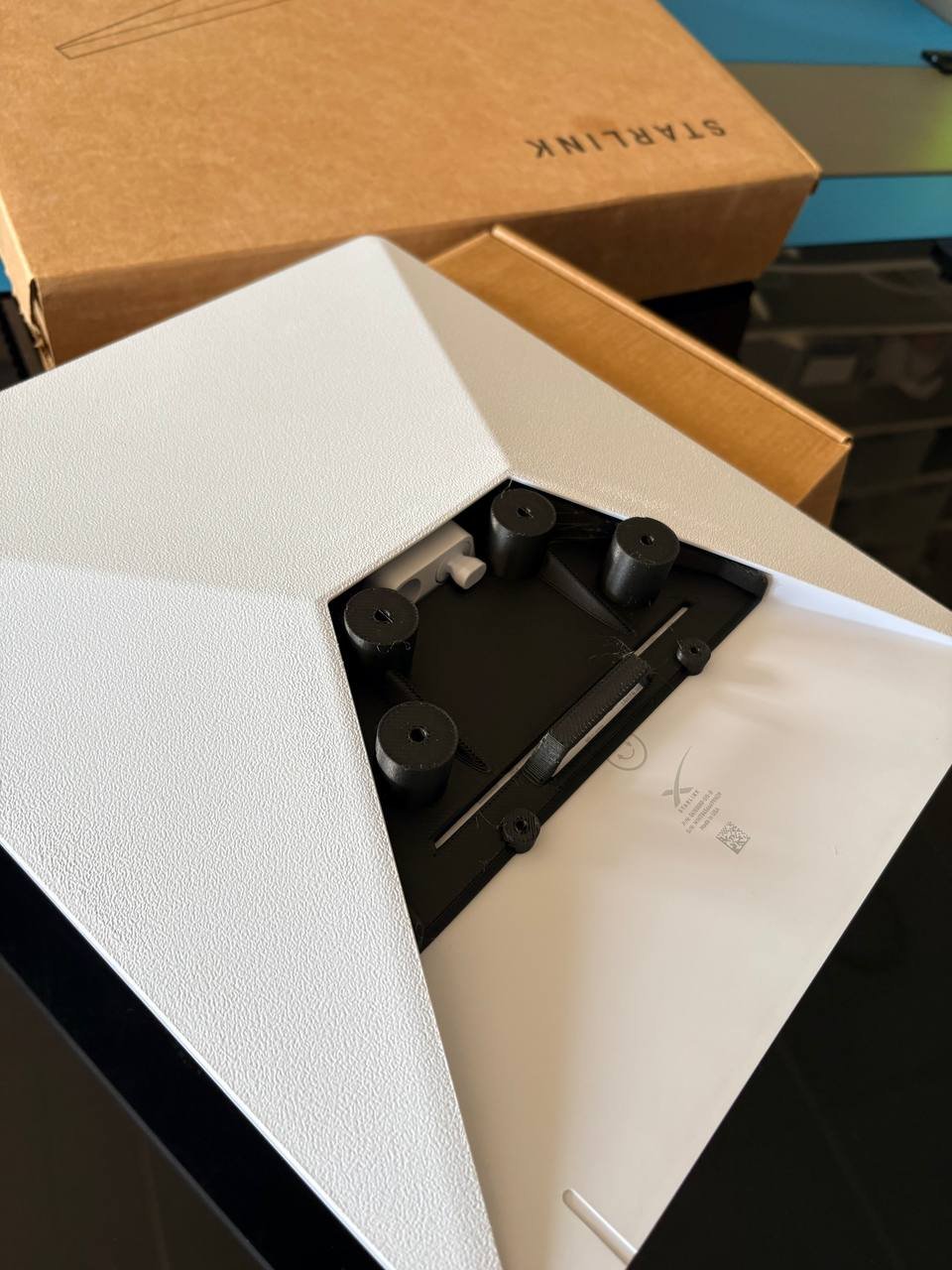
Quick Comparison
| Feature | Mini | Standard | Performance |
|---|---|---|---|
| Size | Excellent | Good | Large |
| Power consumption | Very low | Medium | High |
| Performance | Good | Very good | Excellent |
| Heavy weather | Good | Very good | Excellent |
| Professional use | Basic | Advanced | Professional |
| Cost | Low | Medium | High |
What If You Need Even More Bandwidth?
This is where a professional router such as a Peplink becomes extremely valuable. Instead of relying on a single Internet connection, multiple Starlink terminals — and additional WAN sources such as 5G or marina fibre — can be managed intelligently.
- Automatic failover if one connection drops.
- Load balancing across multiple Internet connections.
- Combination of Starlink, cellular and shore-based Internet services.
- Better continuity for VoIP calls, VPNs, monitoring, video conferencing and guest networks.
These solutions are particularly valuable on charter yachts, vessels with large crews, and boats where reliable connectivity is considered essential.
My Recommendation
After many years working with marine electronics and onboard networking systems, my recommendation for most vessels is straightforward: a Starlink Standard paired with a properly configured Peplink router.
This combination offers an outstanding balance of performance, reliability and cost. For larger yachts, commercial vessels or offshore operations, it often makes sense to deploy multiple Starlink terminals together with an enterprise-grade Peplink router capable of intelligently managing several Internet connections at the same time.
In the end, a reliable onboard Internet system is not just about choosing the right antenna. It is about designing the entire network correctly from the start: antenna location, cable routing, power supply, router configuration, Wi‑Fi coverage, guest access, crew network and failover strategy.
A well-planned installation will provide better performance, greater reliability and a much better experience for everyone onboard.